


The omnichannel reality: why connected experiences drive growth
By Walmart Connect


Marketers still talk about “in-store vs. online” as if it’s a meaningful distinction, but shoppers don’t see it that way.
In a Walmart Connect study, conducted in partnership with Publicis Media Exchange (PMX), 10,651 customers were surveyed and matched to a full year of actual purchase behavior. The finding is clear: people are not choosing channels — they are moving fluidly across them. The shift is not emerging; it has already happened. The real question now is whether marketing has kept pace.
Omnichannel isn’t a strategy — it’s the new majority
Across every surveyed age group (age 18+), 80% to 94% of shoppers engage both in-store and digital experiences, making omnichannel behavior the baseline rather than a segment. At Walmart’s scale, this reflects millions of customers navigating seamlessly between physical and digital environments, often within the same journey. Despite this, many media strategies are still built in silos, even as customers move effortlessly between channels. Growth today does not come from choosing the right channel in isolation; it comes from showing up consistently across all of them. Walmart Connects solutions span the full-funnel, providing more ways for you to reach your omnichannel goals.
High volume shoppers are the most intentional... and the most connected
There is a long-standing belief that frequent shoppers are driven by impulse, but the data shows otherwise. High-volume shoppers are more deliberate and more likely to research — particularly online — before making a purchase. They also represent greater value: shoppers with broader media engagement spend $86.51 per week, compared to $68.65 for those with more limited engagement. We see a similar trend among those exposed to more ad channels. As shoppers engage across more media channels, both purchase frequency and spend increase, with those interacting across five or more channels delivering the highest value. This points to a fundamental shift: effectiveness is no longer driven by repeated exposure within a single channel, but by meaningful presence across multiple, connected environments.
Digital influence and physical decision-making are part of the same journey
While Gen Z is often treated as a digital-first cohort, the reality is more nuanced. Nearly 49% of Gen Z shoppers prefer shopping in-store, particularly in categories like fashion and general merchandise, where physical experience plays a role in decision-making. Our Store ads can help you reach the Gen Z audience. Digital channels frequently drive discovery and exploration, but confidence and conversion often happen in-store. When these behaviors are connected rather than separated, a more accurate picture of the customer journey emerges — one where digital influence and physical decision-making are part of the same continuum, informed by connected signals across touchpoints.
Convenience is consistent, but its meaning depends on context
Shoppers consistently say they choose channels for convenience, but what they mean by convenience depends on the situation. In-store shopping is often about speed and proximity, while online shopping offers ease and flexibility. Delivery removes the need for a trip, and express options meet more immediate needs. Across all of these choices, the unifying factor is time — how shoppers optimize it in different moments. These differences are not just preferences; they are signals that, when connected across touchpoints, enable more relevant messaging, better timing and stronger performance.
The takeaway: from channels to connected solutions
If shoppers are already operating in an omnichannel way, brands need to move beyond fragmented approaches and focus on connection. That means reaching customers at scale across physical and digital environments, using signals derived from real shopping behavior to inform decisions, and activating solutions that connect media, measurement and commerce. Growth does not happen in isolated touchpoints; it happens when those touchpoints work together as part of a unified experience. Explore how our closed-loop measurement works.
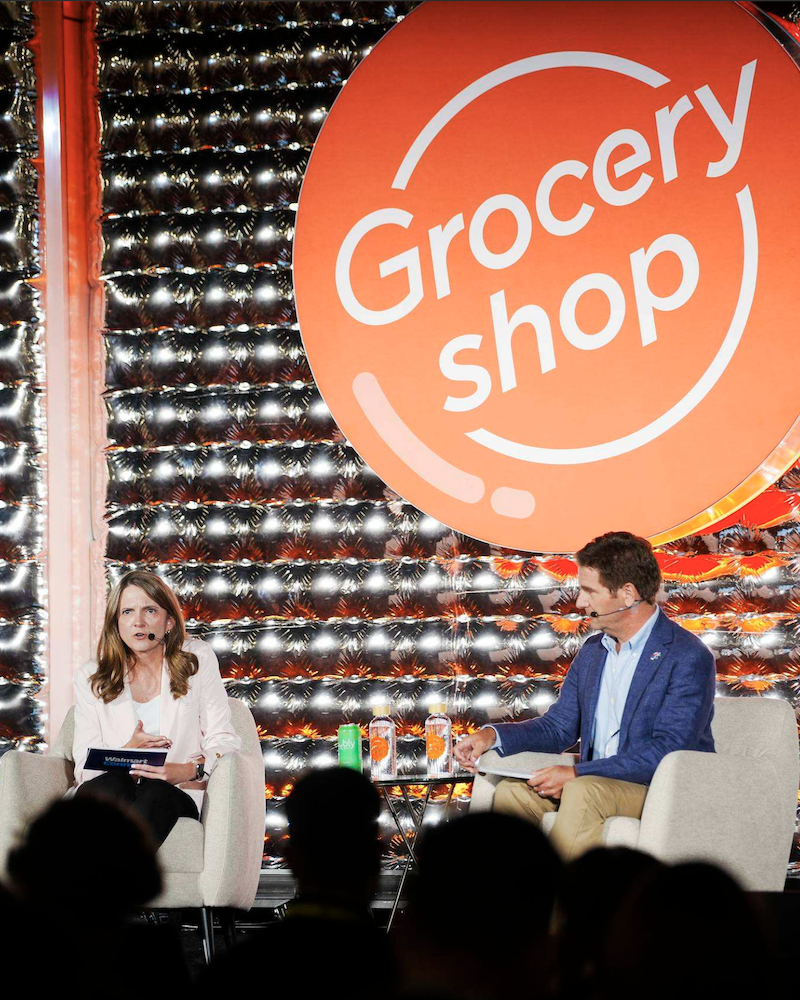
Watch the conversation
See how these omnichannel insights translate into real-world strategies for reaching and engaging today’s shoppers.
Ready to connect the full picture?
Walmart Connect helps brands bring together scale, signals and solutions — linking media and commerce to drive measurable growth across the full funnel.
Connect with your Walmart Connect representative to learn more.
Disclaimer: Insights are generated by matching surveyed shoppers' IDs to Walmart 1st party data (base size 10,651). These insights reflect this specific group and should not be considered representative of all Walmart shoppers.
Source: "WMC Omnichannel Survey", Walmart Customer Spark Community data provided by Walmart Scintilla; August 2025 appended to Walmart First Party Data: 7/9/2024 – 8/11/2025. Insights are generated by matching surveyed shoppers' IDs to Walmart 1st party data (base size 10,651). These insights reflect this specific group and should not be considered representative of all Walmart shoppers.

Ready to get started?
Join Walmart Connect and put our partners, expertise and data to work for you.
You might be interested in



Wherever you are, we’ll help you go further
Launch, optimize, grow—on your terms

 Accessibility